

Key takeaways:
- Section 179 and bonus depreciation allow U.S. businesses to write off the cost of qualifying laser equipment in the year it enters service, instead of recovering it gradually through depreciation.
- The 2026 Section 179 ceiling is $2,560,000. The deduction begins shrinking once annual equipment purchases pass $4,090,000.
- Bonus depreciation now sits at 100% permanently, having previously been a temporary provision.
- The majority of IPG Photonics equipment and services can qualify: laser sources, optics and beam delivery, chillers, fume extraction, integrated subsystems, handheld lasers, software, training, and complete automated laser systems.
- The deduction follows the in-service date, not the purchase date. For a 2026 deduction, calendar-year filers need the system commissioned by December 31, 2026.
- Section 179 must be applied before bonus depreciation and it cannot exceed your active business taxable income. Bonus depreciation has no such ceiling.
DISCLAIMER: The information in this article is provided for general information and applicable to U.S. businesses only. Tax outcomes depend on your entity structure, income, and state. This article focuses on industrial equipment for manufacturers and fabricators, although some of the information also applies to laboratories and medical service providers. Additionally, Section 179 and bonus depreciation deductions cannot be taken by tax-exempt organizations. Consult your tax adviser before making decisions based on this article.
Laser equipment, technology, and systems offer exceptional productivity, quality, and cost efficiency benefits in a variety of industrial, scientific, and medical applications, especially when compared to non-laser approaches. However, the initial equipment cost can be a sticking point for businesses implementing a laser solution for the first time.
Fortunately, there are two federal provisions that can substantially reduce the effective cost of laser equipment: Section 179 and bonus depreciation.
Used together, they let many businesses deduct the entire cost of a laser installation in its first year of service. This article covers the mechanics, the 2026 details, which IPG Photonics products and services typically qualify, and two savings scenarios.
What is Section 179?
Ordinarily, capital equipment is recovered through MACRS depreciation across a multi-year schedule — commonly seven years for industrial manufacturing assets. This means that you can only deduct a portion each year until the cost is fully recovered.
By comparison, Section 179 lets you take that entire deduction up front in the year the equipment goes into service. The total deduction over the asset's life is unchanged. What changes is the timing.
For example, a deduction claimed in 2026 lowers your 2026 tax bill rather than trickling back to you through 2033.
There are additional benefits for manufacturers financing laser equipment rather than paying the full price upfront. Since Section 179 deductions are based on the full purchase price even when you've only made a partial payment, the first-year tax deduction can exceed the cash you've actually paid in that tax year.
Which IPG Photonics Products Fall Under Section 179?
Section 179 covers tangible property and bundled costs used in an active trade or business, which includes the majority of industrial laser hardware and software provided by IPG Photonics:
Laser sources. Continuous Wave and pulsed fiber lasers, across power classes, whether purchased as standalone sources for integration into an existing line or as part of a larger package.
Optics and beam delivery. Processing heads, scan heads, fiber optic cables, and related beam delivery hardware.
Support equipment. Chillers, fume extraction and filtration units, gas delivery hardware, and similar peripherals. These qualify on their own footing as business equipment, meaning they don't need to be bundled with a laser purchase to be deductible.
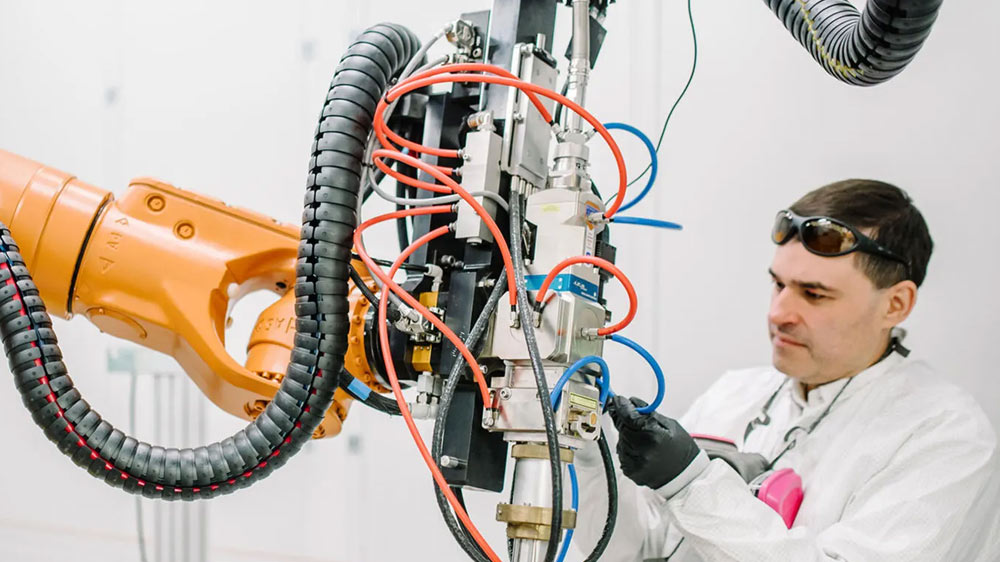
Integrated subsystems. Motion stages, robotic arms, workholding, vision and inspection modules, and safety enclosures supplied as part of a laser processing package.
Handheld laser systems. Portable laser welding, cleaning, and cutting units, including consumables-adjacent hardware like wire feeders and nozzle sets, though small recurring items are more often treated as supplies expensed as used rather than capitalized.
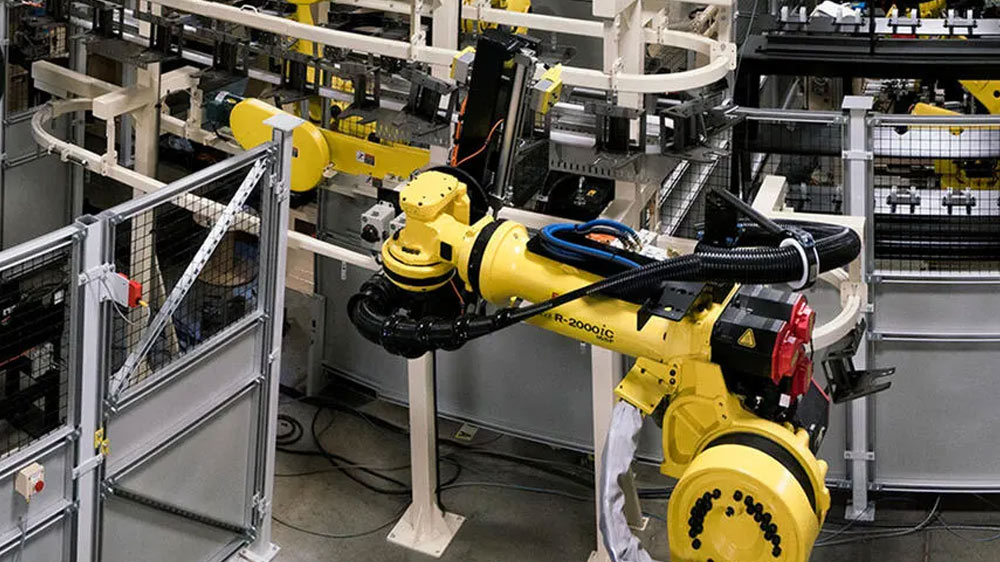
Complete automated systems. Turnkey standalone systems, robotic cells, and custom production lines, including items like tooling and conveyors.
Software. Laser software, including laser control, optical and beam control software, and machine vision (such as real-time laser weld measurement and associated modules). Off-the-shelf software typically qualifies for Section 179. Control and process software embedded in or bundled with a laser system is generally folded into the equipment's cost basis. However, custom software developed specifically for your operation follows different rules and may not qualify.
Training. Training, even laser equipment and system training, does not automatically qualify for Section 179. However, if manufacturer training is bundled with the initial equipment purchase, it may qualify for deduction.
Conditions You Have to Meet
Qualifying property must satisfy all of the following:
You own the equipment. Financed purchases count, and paying cash in full is not required.
It's new to you. Previously owned equipment qualifies as long as your business hasn't used it before and the sale is at arm's length. Buying a refurbished or second-hand source doesn't cost you the deduction.
Business use exceeds 50%. The majority of laser equipment purchases naturally see 100% use for business purposes. However, if your laser equipment is used 50% or less for business purposes, it does not qualify for Section 179. Additionally, equipment used less than 100% — say 80% — for business purposes reduces what you can deduct proportionately.
Equipment useful life exceeds one year. IPG Photonics industrial laser products meet this requirement universally.
It's in service, not just purchased. Your laser equipment can’t just be ordered or sitting on your shipping dock. It must either be actively in use or ready for service. Calendar-year filers claiming on a 2026 return need equipment ready for use by December 31, 2026. Fiscal-year filers work to their own year end.
2026 Thresholds
Current limits under OBBBA §70306, as adjusted for inflation:
2026
Deduction Cap: $2,560,000
Phase-Out Threshold: $4,090,000
Full Elimination: $6,650,000
2025*
Deduction Cap: $2,500,000
Phase-Out Threshold: $4,000,000
Full Elimination: $6,500,000
*The 2025 row applies to fiscal-year filers and amended or extended 2025 returns.
Above the phase-out threshold, the maximum deduction drops by one dollar for every dollar of additional qualifying purchases. Once the full elimination threshold is reached, additional Section 179 deductions above that number can no longer be taken — though bonus depreciation remains fully available at any purchase volume.
Both figures are indexed to inflation annually and are expected to change in 2027.
Understanding Bonus Depreciation
Bonus depreciation is a separate first-year allowance that can be applied in addition to Section 179. Under OBBBA §70301 it stands at 100% permanently for property acquired and placed in service after January 19, 2025.
Section 179 must be applied to laser equipment before bonus depreciation. IRS ordering rules apply Section 179 to the purchase, then bonus depreciation to whatever basis remains.
Additionally, the limits of Section 179 and bonus depreciation differ. Section 179 cannot exceed your taxable income from active business activities; anything above that must be carried forward to future years. Bonus depreciation has no such cap and can even push you into a net operating loss that carries forward.
A Note on State Conformity
Several states impose Section 179 caps below the federal ceiling, and several do not allow bonus depreciation. Confirming your state’s conformity with federal guidelines ahead of a laser equipment purchase is recommended.
Some Practical Savings Scenarios
Both scenarios below assume a 37% federal rate — the top bracket for owners of pass-through entities such as sole proprietorships, partnerships, and S corporations. C corporations pay a flat 21% federally, so a C corporation's savings would be lower than in the provided examples.
Each example also shows a QBI-adjusted figure. Taking a large equipment deduction reduces qualified business income, which in turn shrinks the §199A deduction available to pass-through owners.
Scenario 1: A Multi-Kilowatt Fiber Laser Source
The scenario below covers the purchase of a single several-kilowatt fiber laser purchased for integration into existing equipment, with no other qualifying capital purchases during the year.