
The Critical Role of Bonding in Modern Module Manufacturing
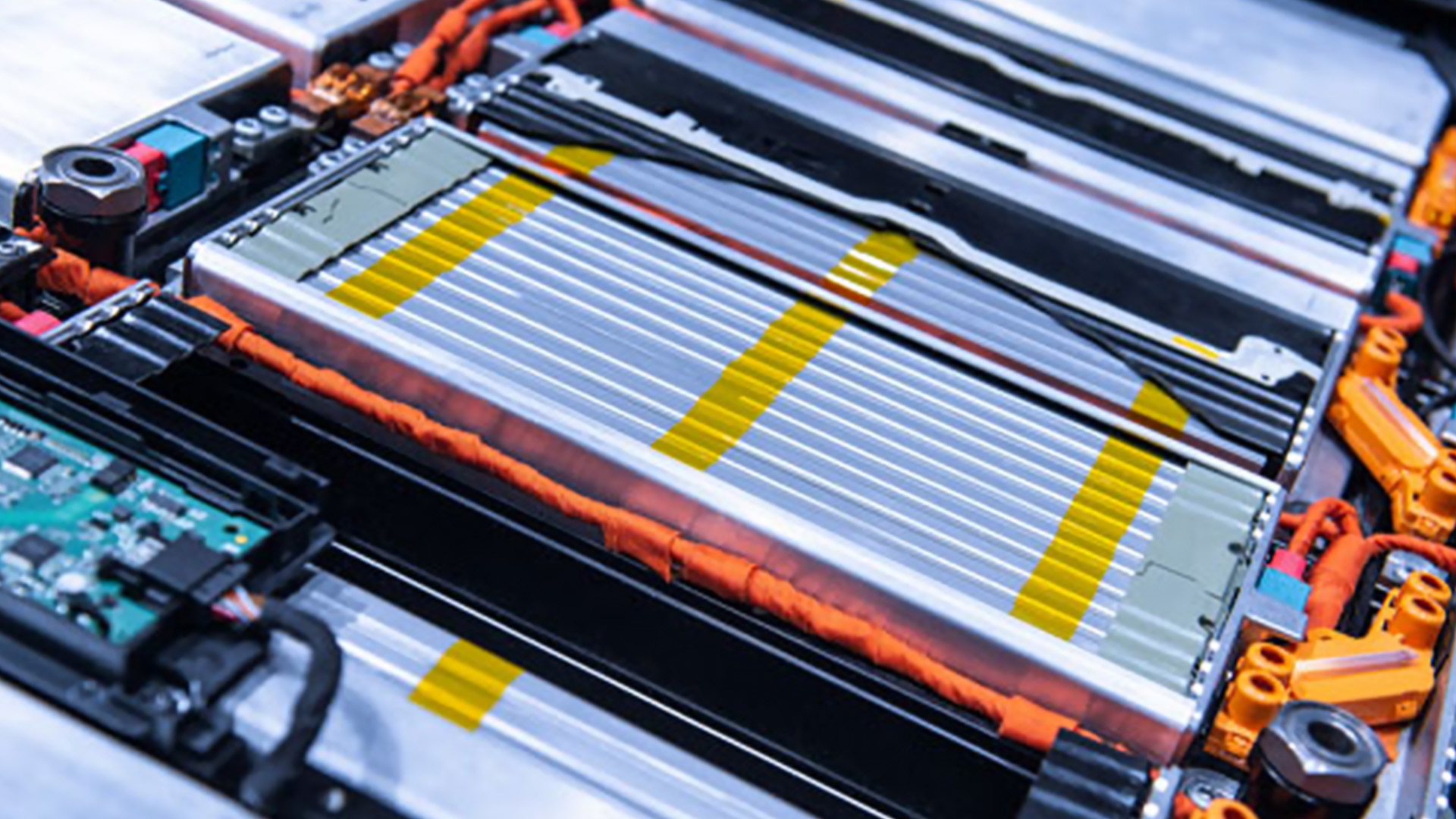
Adhesive bonding in the automotive industry is gaining traction starting with bonding of windscreens, various internal trim components, electrical components and increasing use in structural applications. It is also used extensively in battery module assembly.
Bonding, in place of mechanical fasteners, can open design flexibility, enhance mechanical stability and mitigate effects of vibration and shock.
Bonding encompasses a range of applications from structural, semi-structural, flexible and pressure sensitive and may be found serving in roles including cell-to-cell bonding, busbar protection and thermal management applications.
Key Performance Requirements for Battery Bonding
Characteristics of bonding will be dependent upon the application.
Bonds for Harsh Environmental Conditions
Regardless of land-based energy storage or electric vehicle applications, battery modules can be exposed to extreme heat or cold. For the automotive industry, design guidelines impose a range between -40 deg C to 80 Deg C where cooling and heating systems are employed to minimize freezing or overheating.
In the case of vehicle-based applications, bonds will be subject to vibrations and need to be strong enough to prevent failure in the case of an accident. In the case of lid bonding, they also need to be tolerant to road salts and provide a leak proof seal to the inner components of the pack.
Cell-to-Cell Bonding: Stability, Support and Safety
Adhesives used on cell-to-cell bonding will have primary role in providing mechanical stability, particularly in automotive applications where the battery will be subject to vibrations.
In the case of cylindrical cells, adhesive polyurethane foam can provide additional support and rigidity to the individual cells within the module.
In the case of prismatic module assembly, individual cells may be bonded into a stack prior to installation in the module.
In the case of pouch-based modules, some compressibility of the adhesive is necessary to allow pliability as the cell expands and contracts during the charge / discharge cycle.
Bonding's Role in Thermal Management
According to the U.S. National Renewable Energy Laboratory, lithium‑ion batteries operate most efficiently between 15 °C and 30 °C, however, as noted above, battery packs are exposed to significant temperature extremes well beyond this range.
For pouch and prismatic modules, these can typically be bonded to a cooling plate using adhesives which incorporate thermally conductive filler materials such as boron nitride, aluminum nitrides and similar materials. These adhesives offer high thermal conductivity complemented with electrical insulation, protecting against shorts between cells.
In the case of cylindrical cells, cooling ribbons may be wound around the cylindrical cells to provide cooling to the system.
Strength, Rigidity, and the Structural Demands on Bonds
In the cases of structural applications, bonding can help reduce the number of mechanical fasteners used in the pack and allows manufacturers to optimize their production processes. Adhesives used in these applications need to perform under harsh conditions, high heat, humidity and corrosive environments and in the case of lid sealing, need to prevent ingress of contaminants into the pack.
Precision Surface Prep: Laser Methods for Better Bonds
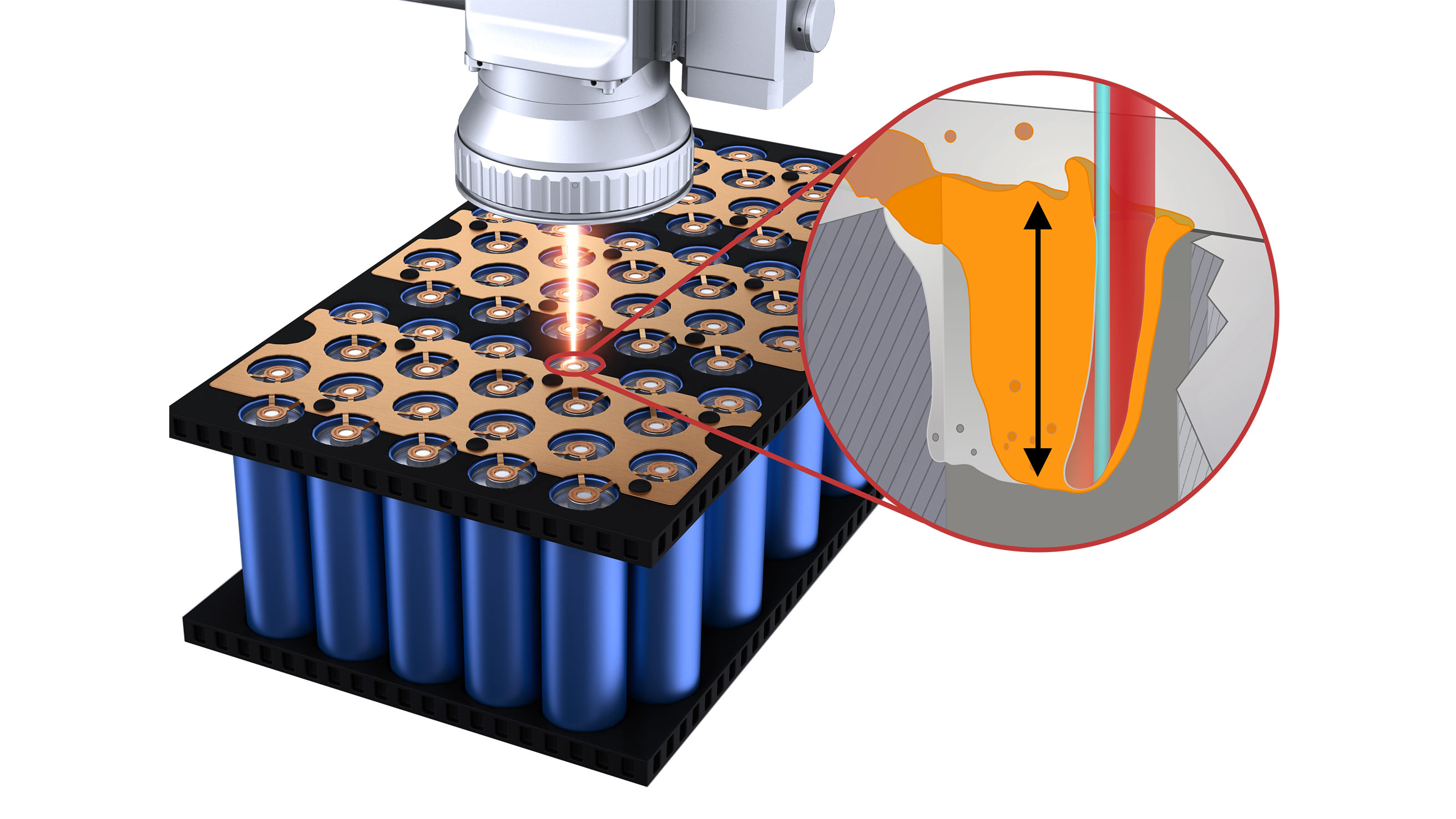
Lasers can be ideal solutions for preparing surfaces for adhesive bonding enabling surface preparation only where it is needed.
- Laser Cleaning of contaminants such as oxides on aluminum or copper, residual machine oils and dust and dirt accumulated during material transportation and handling.
- Laser Ablation of coatings, paints and anodized layers from the workpieces allowing the workpiece base materials to be directly bonded.
- Laser Surface Structuring or Texturing
Lasers can be ideal tools for providing repeatable texturing results on a variety of part types. Using beam scanning systems, the laser can be precisely programed to create micro textures on the surface of the part increasing surface area. With the wide range of adhesives and fillers in use, the texture can easily be tailored to maximize the wettability of the workpiece.
In the case of battery manufacturing, lasers are an ideal non-contact process that is compatible with a wide range of materials including aluminum, copper, coated materials and polymers. Easily scalable, laser processes are extremely repeatable and easily integrated into automated production processes.
Why Laser Surface Prep Outperforms Traditional Methods
A variety of processes are available which include mechanical abrasion, chemical processing and plasma treatment.
- Mechanical Abrasion and Media Blasting
These techniques offer simplicity or operation, however as the media or abrasive tools wear, results can be inconsistent. - Chemical Cleaning and Etching
Can be very effective and has advantage over laser when there is no “line-of-sight” available for the laser to access interior features of certain part types. A disadvantage to this is, of course, environmental concerns and costs of disposing of hazardous waste, whereas lasers are environmentally friendly. - Plasma Treatment
Can be effective in areas where there is inherently little contamination and is relatively easy to implement on in-line process equipment. Like laser processes it is also environmentally friendly, however capabilities for surface structuring are limited when compared to the flexibility of laser.
While laser has higher initial costs, it can deliver precise repeatable results with no consumables, no chemicals and can be highly selective, cleaning, activating or texturing only the areas that need to be processed. The flexibility in laser technology and reduced operating expenses offers manufacturers attractive return on investment throughout the life of the equipment.
Final Thoughts: Building Better Batteries Through Better Bonds
Battery Pack manufacturing is increasingly relying on adhesive use in the manufacturing process to produce batteries that can withstand vibrations, thermal cycling, high heat and humidity while providing a long service life to the end user.
Lasers are essential in preparing surfaces to maximize the performance of a wide range of adhesives used in the manufacturing process. The results are:
-
- Improved shear and tensile strength
- Improved product durability through stronger bonds.
- Better matching surface texture to adhesive viscosity and filler characteristics, i.e. improved wettability across more materials.
Because the process is non-contact, highly repeatable and easy to integrate into high volume production lines, laser processes are becoming the preferred method of preparing surfaces for the variety of bonding applications used within modern electric vehicles stationary storage systems.
Getting Started with a Laser Solution
Talk to one of our laser cleaning experts to get started on selecting the right system to boost battery quality, reliability and production efficiency.